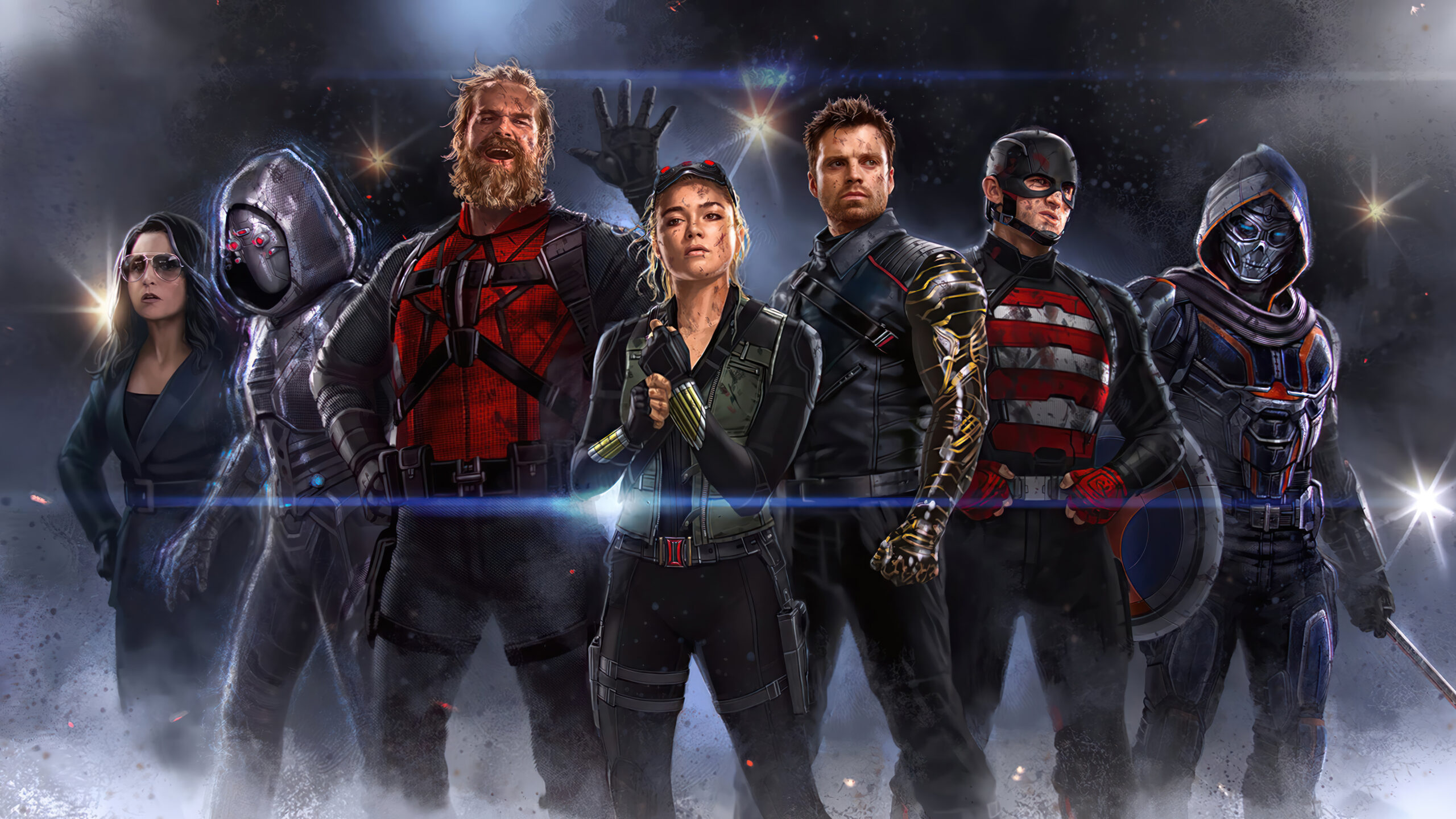
Thunderbolts* Movie Review 2025 – A Dark, Gritty, and Bold New Chapter in the Marvel Cinematic Universe
Thunderbolts* Movie Review The Marvel Cinematic Universe (MCU) has never been afraid to experiment, but Thunderbolts* feels like one of its boldest creative risks yet. Moving away from colorful heroics and crowd-pleasing fan service, Marvel presents a morally complex, emotionally heavy, and character-driven film that explores what happens when broken people are forced to become a team. In this Thunderbolts Movie Review, we take a deep dive into the story, performances, themes, action, direction, and overall impact of the film.
Unlike traditional Avengers-style spectacles, Thunderbolts* thrives on darkness, trauma, and moral ambiguity. It’s not about saving the world with flashy hero moments—it’s about survival, manipulation, and redemption. Let’s explore why Thunderbolts* might be one of the most important MCU films in recent years.
Introduction to Thunderbolts* Movie
Thunderbolts* is Marvel Studios’ answer to the question: What if the heroes aren’t heroes at all? Inspired by the Marvel Comics team of the same name, the film brings together a group of anti-heroes, former villains, and morally conflicted characters who operate under government control.
This movie marks a tonal shift for Marvel—gritty, grounded, and emotionally raw. Instead of witty banter and lighthearted humor, Thunderbolts* focuses on psychological scars, trust issues, and the consequences of past choices.
Plot Overview (Spoiler-Free)
At its core, Thunderbolts* follows a covert government program designed to deploy dangerous individuals for missions too morally questionable for traditional heroes. When global threats arise that require deniability, these operatives are sent in—no questions asked.
Each member of the team has a troubled past, and none of them trust one another. As the mission unfolds, secrets are revealed, loyalties are tested, and the team begins to question whether they are weapons—or people who still deserve a choice.
Without giving spoilers, the story smartly balances action with character development, allowing the emotional weight of each character’s past to shape the narrative.
Character Development – The Heart of the Film
One of the strongest aspects of Thunderbolts* is its character-focused storytelling. Unlike many ensemble films that struggle to give everyone enough screen time, this movie ensures that each character feels meaningful.
Yelena Belova
Yelena stands out as the emotional anchor of the film. Still dealing with loss, identity struggles, and the burden of her past, she brings vulnerability and depth that elevates the story. Her arc is powerful, realistic, and deeply human.
Bucky Barnes (The Winter Soldier)
Bucky’s journey continues to be one of Marvel’s most compelling arcs. Haunted by guilt and manipulation, he represents the idea of forced redemption. His struggle with leadership, responsibility, and self-worth is portrayed with maturity and nuance.
Red Guardian
While often providing moments of dark humor, Red Guardian is far more than comic relief. His insecurities, regret, and desire to matter add emotional layers that make his character surprisingly tragic.
Ghost, Taskmaster & Others
Each supporting member contributes to the film’s themes of control, trauma, and survival. Their shared history of being used as tools makes their interactions tense and unpredictable.
Performances – Raw and Grounded Acting
The cast delivers some of the most grounded performances in MCU history. There’s less exaggeration, fewer jokes, and more emotional honesty.
Florence Pugh continues to prove why she is one of Marvel’s strongest performers. Her acting feels natural, raw, and deeply engaging. Sebastian Stan brings subtle intensity, portraying Bucky with quiet pain rather than explosive anger.
The chemistry between cast members feels intentionally uncomfortable—and that’s a good thing. These characters aren’t friends, and the performances reflect that reality.
Direction and Tone – A Dark MCU Experiment
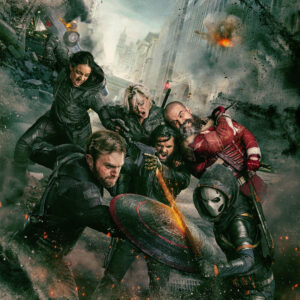
Director Jake Schreier deserves credit for embracing a darker tone without losing narrative clarity. The visual style is muted, grounded, and realistic. Gone are the bright colors and over-stylized CGI landscapes; instead, we get tight camera work, practical environments, and a sense of realism rarely seen in Marvel films.
This darker tone won’t appeal to everyone, but it suits the story perfectly. Thunderbolts* feels more like a political thriller mixed with a psychological drama than a traditional superhero film.
Action Sequences – Brutal and Purposeful
While Thunderbolts* may have fewer action scenes compared to other MCU films, every fight feels meaningful. The action is raw, physical, and grounded, emphasizing pain, exhaustion, and consequences.
There are no overpowered god-like battles here—just people fighting to survive. Hand-to-hand combat scenes are especially impressive, showcasing realism over spectacle.
Themes – Trauma, Control, and Redemption
This Thunderbolts Movie Review would be incomplete without discussing the film’s powerful themes:
Trauma and Mental Health
Every character carries emotional scars. The film doesn’t rush healing or pretend redemption is easy—it shows pain as something that lingers.
Government Control
Thunderbolts* questions the ethics of using broken individuals as tools. Who decides what’s right? And at what point does “serving the greater good” become exploitation?
Redemption Without Forgiveness
Perhaps the most mature theme of the film is that redemption doesn’t always mean forgiveness. Some sins can’t be erased—but people can still choose to do better.
Music and Sound Design
The soundtrack is subtle yet effective. Rather than overpowering scenes, the music enhances emotional moments with restraint. Silence is used effectively, allowing tension to build naturally.
Sound design during action sequences feels realistic—every punch, explosion, and impact carries weight.
Visual Effects – Realism Over Spectacle
Unlike CGI-heavy Marvel projects, Thunderbolts* opts for grounded visual effects. When CGI is used, it supports the story rather than distracting from it.
This approach makes the film feel more intimate and believable, reinforcing its mature tone.
How Thunderbolts* Fits Into the MCU
Thunderbolts* plays a crucial role in shaping the future of the MCU. It bridges the gap between superhero mythology and political realism, setting the stage for morally complex storytelling going forward.
Rather than teasing massive multiverse chaos, the film focuses on consequences, responsibility, and character evolution—something the MCU has needed.
Criticism – Where the Film Falls Short
While Thunderbolts* is ambitious, it’s not perfect.
- Some viewers may find the pacing slower than typical Marvel films
- The darker tone may feel heavy for audiences expecting humor
- Certain characters could have benefited from more backstory
However, these issues are minor compared to the film’s overall strengths.
Audience Reaction and Expectations
Fans looking for explosive Avengers-style fun may be surprised, but viewers who appreciate character-driven storytelling will likely love this film. Thunderbolts* feels designed for a more mature audience—those ready to see superheroes as flawed, damaged, and human.
Final Verdict – Is Thunderbolts* Worth Watching?
Absolutely.
This Thunderbolts Movie Review concludes that Marvel has successfully delivered one of its most daring and emotionally resonant films to date. It’s not flashy, it’s not funny, and it’s not easy—but it’s meaningful.
⭐ Rating: 8.5/10
Thunderbolts* proves that the MCU can evolve beyond formulaic storytelling. It’s a powerful reminder that even in a world of superheroes, the most compelling battles are internal.

2 thoughts on “Thunderbolts* Movie Review 2025”